Learn › Questions people ask
Question
Can fusion really work on Earth?
Yes — fusion has been achieved many times in labs. The challenge isn't whether it works, but making it net-positive, continuous, and economical.
Fusion on Earth is proven physics; the frontier is engineering and economics. Kronos's approach is to extend demonstrated results rather than await a breakthrough — see does Kronos depend on a breakthrough? and why is fusion so hard?
Questions & answers
Can fusion actually be done on Earth?
Yes. Fusion reactions have been produced in laboratories for decades, and experiments have released large amounts of fusion energy. The open challenge is not whether fusion works, but doing it net-positive (more energy out than in), continuously, and affordably enough to sell power.
Isn't the sun's gravity what makes fusion possible?
The sun uses immense gravity to confine and compress its plasma. We can't reproduce that on Earth, so we compensate with much higher temperatures and either magnetic or inertial confinement. Earth-based fusion actually runs hotter than the sun's core to make up for the lack of gravitational squeezing.
So why hasn't it happened yet commercially?
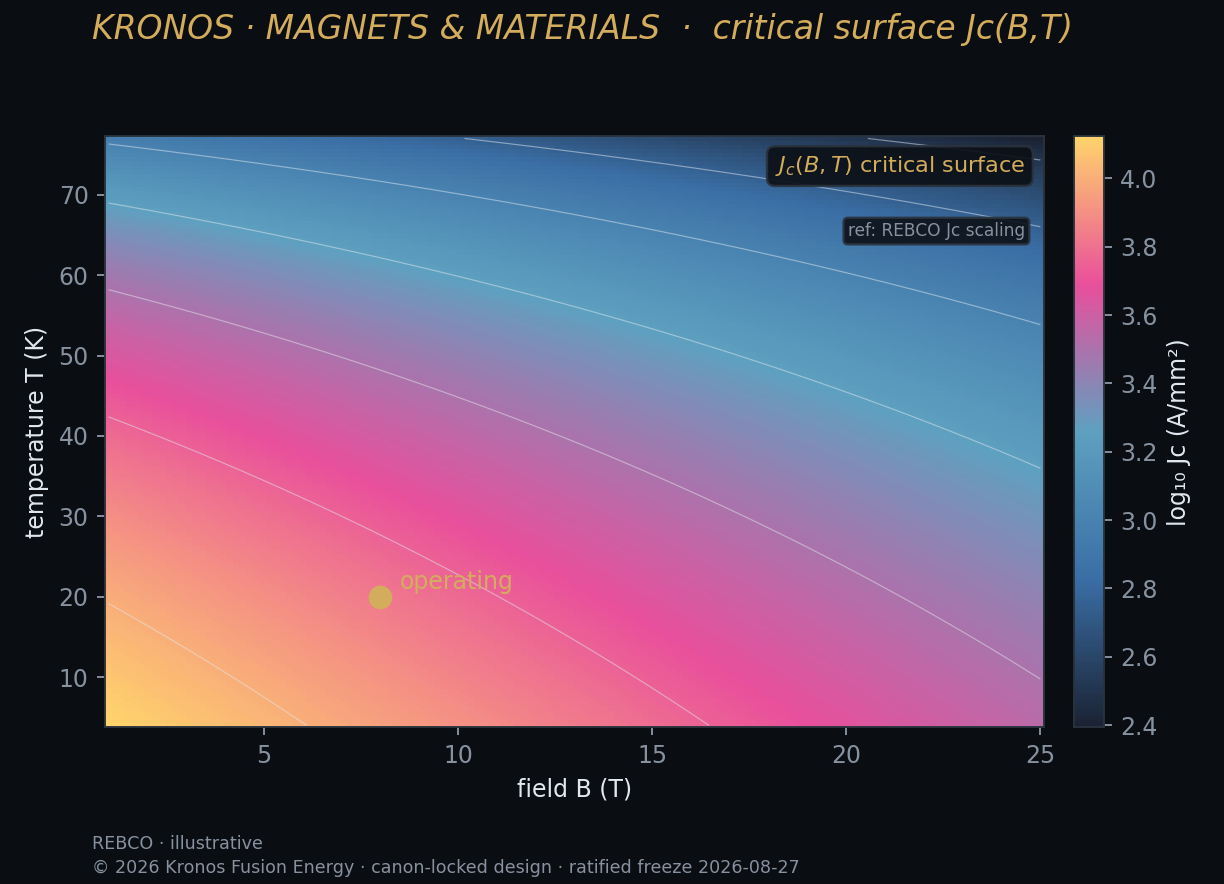
Because meeting all the conditions at once — temperature, confinement, density, and doing it economically — is genuinely hard. Recent advances in high-temperature superconductors and plasma shaping are what make compact, commercial designs like Kronos's newly plausible.