Ballooning & Mercier Stability
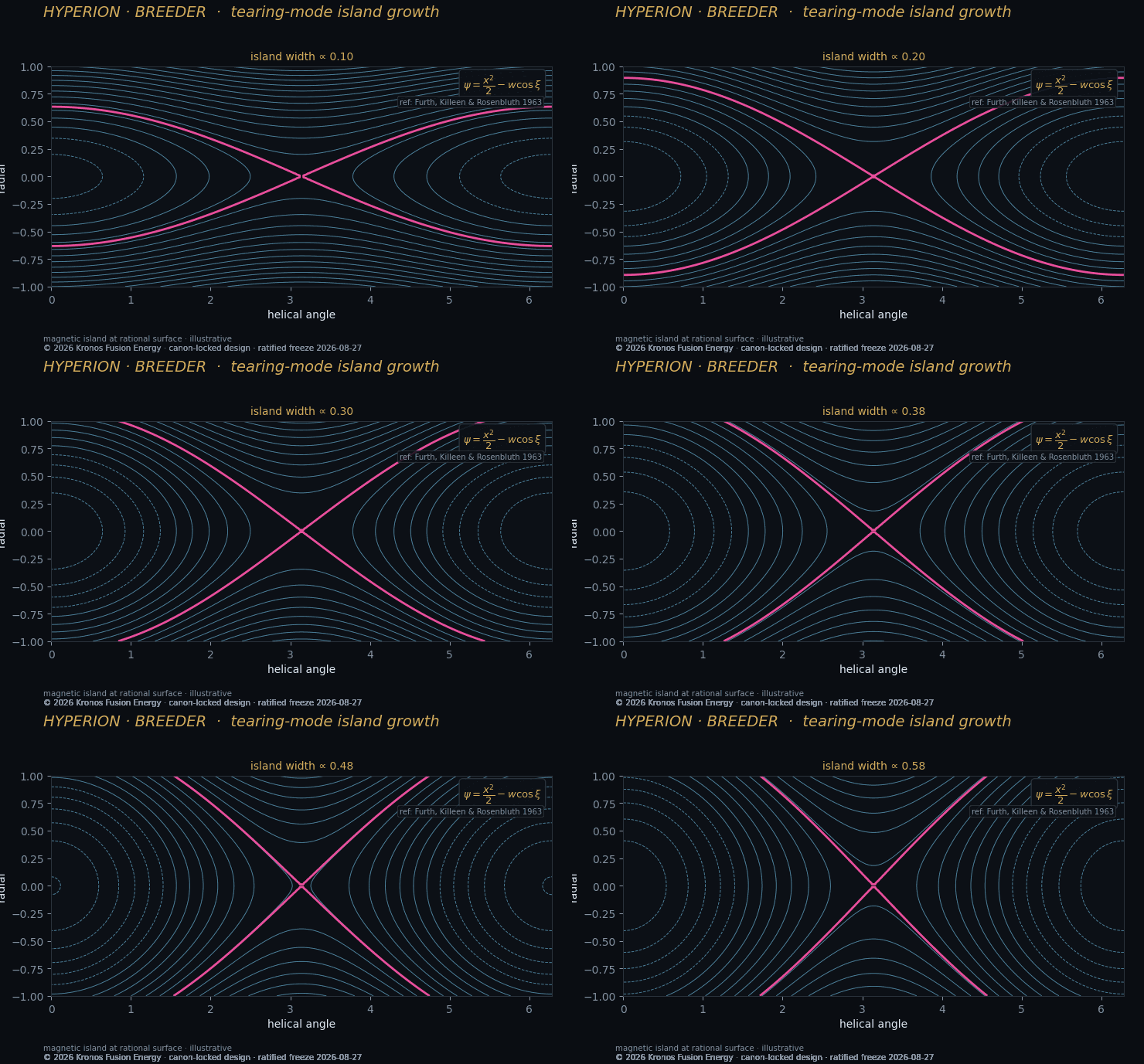
Ballooning and Mercier modes are pressure-driven instabilities that cap how much pressure a plasma can hold. Kronos checks its second-stability access.
- What
- Pressure-gradient-driven MHD instabilities
- Ballooning
- Bulges where field-line curvature is unfavorable
- Second stability
- A regime where high pressure re-stabilizes
- Analysis
- Ballooning/Mercier 2nd-stability (S23)
Ballooning modes are instabilities driven by the plasma pressure gradient — they bulge outward in the regions where the magnetic field curvature is unfavorable, and they limit how steep a pressure profile the plasma can sustain. The related Mercier criterion sets a localized interchange-stability condition. Together they help bound the achievable beta.
Interestingly, at high enough pressure some configurations enter a second stability regime where ballooning modes re-stabilize. Kronos MetroVolt's deposited microstability analyses (S23) assess ballooning and Mercier limits and the plasma's access to favorable regimes, alongside the kink and resistive-wall-mode chains that complete the MHD stability picture.